11 February 2007

amalfi coast'n


The Costiera Amalfitana is one long, gorgeous stretch of aquamarine and green, and is touted as one of Europe's finest coastlines. It runs along the southern side of Sorrento's peninsula and is identified with the towns of Positano, Amalfi and Ravello among others. Speaking from recent experience I would also mention that it seems to be one of Europe's sheerest coastlines. As in cliffs. Cliffs that the bus hugs, throttling its way down the winding and motorcycle-clogged Italian road.

Naples is a short train ride away from Sorrento and from Sorrento you can take the bus to towns along the Amalfi coast. There are also excellent pastry and promenade opportunities in Sorrento. Before catching our bus we hit the streets with the rest of the town and rolled up to a great café.


The baristas all wore dapper almond-shaped caps and resembled something between short-order cooks in an American diner and flight attendants of the 1960's. And not only did they have great little hats (as did many of the baristas in Napoli) but they also dust your macchiato with a cocoa powder smiley face.

When we got on the bus there was a sign above the driver that basically said "whatever you do, don't bother this guy - he's driving." In fact, there were two signs saying this. One went so far as to say it was "prohibited." And there was a picture of a saint. We should have known.


We'd received advice to sit on the right side of the bus and at the beginning of the ride we didn't quite understand the significance. There were a few good views but there were also a lot of views of olive and orange trees. Nice, yes, but not something you need to sit on a certain side of the bus to see. But, wait. As the bus wound its way up and over the peninsula we go to the side with the views. And the cliffs. And the drama.

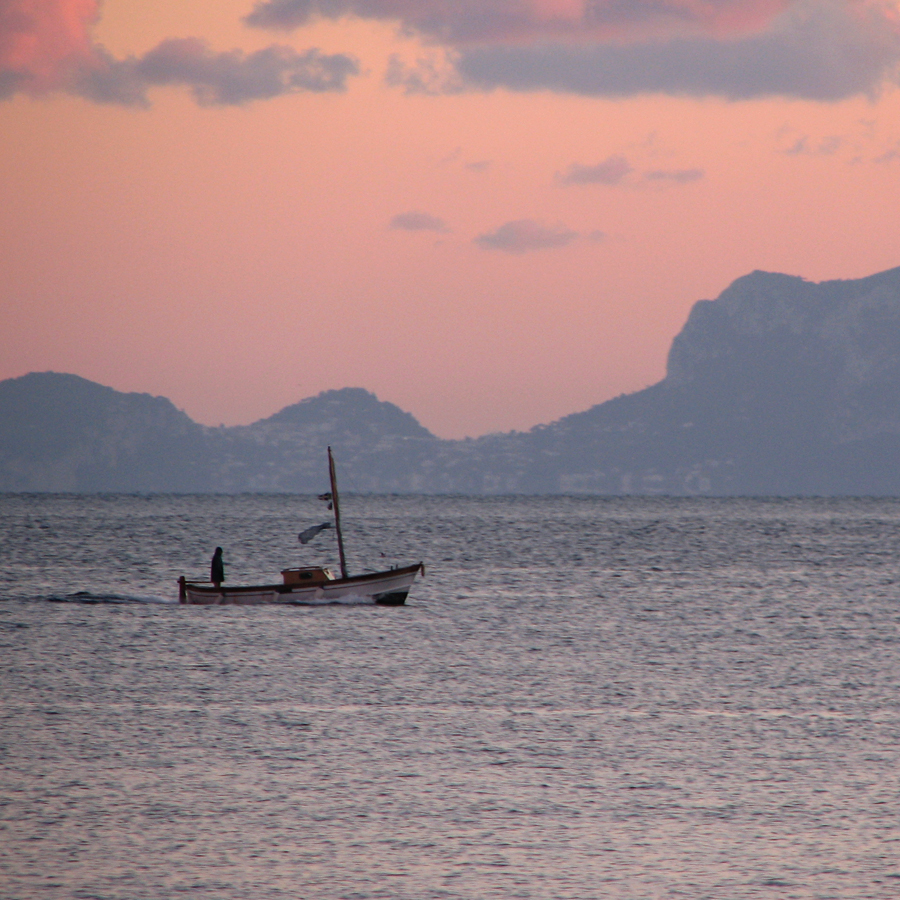
It was stunning. Aqua water as far as the eye could see. Cliffs so sheer you couldn't see their faces. And tiny pebbled beaches in nooks and crannies. There were small colorful towns clinging to steep slopes and others perched high above the sea. There were islands dotting the turquoise horizon and sun riding the water like shocks of glitter. It was marvelous.

And it made me nauseous.

So nauseous that I had to move to the other side of the bus. The wrong side of the bus. And Stefano said I turned green. We had opted to go all the way to Amalfi, bypassing Positano with plans to return to it on the way back. This meant an hour-long ride which sounded great when we'd made the plans.

However, in practice, it didn't sound very good at all. It sounded awful. Apparently the cold I had was impacting my equilibrium and this was impacting my ability to ride a bus without feeling so nauseous I could cry. The good news is that I didn't cry. And I didn't throw up.

And as requested, I didn't talk to the driver.

When we got to Amalfi I peeled myself from the bus seat I'd been laying on and Stefano, in a moment of utter brilliance and perfect understanding of Italy, made a beeline to the pharmacy. It was not only Sunday (egads!) but it was one o'clock (heavens, no!) in the afternoon. The fact that it was open at all was something of a miracle. No sooner had Stefano bought me a package of Travel Gum and stepped out the front door, then the pharmacy closed up tight.


As I chewed my magical gum and started to feel much better we went on a hunt to find food in the off-season. Amalfi is a beachside town and so it wasn't exactly hopping in early February. We did find an Italian version of grilled cheese, several pieces of pizza, and a pastry or two. I was feeling better and it was a beautiful place. So many colorful buildings, the nook and crannies Italian towns are known for, and of the course the laundry drying outside. Even from the entrance of a church with signs reminding visitors of the dignity of the place, you could see someone's towels and aprons flapping in the breeze. If you don't love that, you don't love Italy.

We went to the shore and walked the beach. You can easily imagine the summer there. What were open spreads of beach for us, would become strangled with beach umbrellas and towels, chairs and sunbathers. We preferred it as it was - empty, quiet, and a touch too crisp. It was perfect.


We took the bus back to Positano and followed gravity down to the shoreline there. It was the same sort of quiet, and the same turquoise waters. Churches and homes clung to the steep grades and teens played soccer on the deserted beach. A scraggy artist painted the seashore and older people watched kids chase dogs.

There were no sunbathers. No sunhat sellers. Rowboats sat on the shore, upended and waiting for the season. It was perfect and verging on solitary. Except when we wove our way back up to the bus stop. Suddenly we had found a crowd and we all waited at the side of the road. Everyone had their own way of passing the time, mainly griping about the bus not arriving and/or smoking. We just sat there hoping our toes would not fall victim to the next fast car zipping along the coastal path.

Apparently we were lucky. When the bus arrived we were all able to board and there were seats for all. In peak season, we've since heard, you're often left waiting for several buses before you find an opening. All the better for the off-season. And more the better because I didn't get nauseous on the ride back. I just kept chewing that magical gum.

And not talking to the driver.

08 February 2007

amore on the water


Taking a walk along the Bay of Naples is vastly different than strolling around Milan. There is no grey matte finish to the sky. You can see the sun and confirm its existence. The water shimmers and flows. You remember that even in cities there can be a touch of nature. Or an entire coast.

Naples and Milan, both in Italy but with a large swath of the country in between them, share one firm commonality. The traffic may be far more hectic in Naples. There may be larger and more fierce swarms of scooters leading off at every traffic light. And there is certainly a local dialect that trumps any and all Italian language skills I've managed to accumulate. But...

This is still Italy. And so this is still the land of unabashed public affection.


This couple could be anywhere from Milano to Napoli; they have all the basic requirements. They have a motor scooter. They have their shared admiration. And they have, without a doubt, no shame in canoodling in public.

To them, I say good for you. It's a fact that many Italians live with their parents well into their thirties. So everyone, including their parents, probably prefers that they share their romantic antics away from home. Along a busy street. Perhaps on the sea shore as the sun sets behind a colorful jumble of homes.


It bears repeating that in my brief Italian experience this appears to be quite normal from North to South. In fact it made me feel at home in Naples. Because even though I couldn't understand what many of the locals were saying, I knew that, by the look of things, they were still quite Italian.

ah napoli


They're lucky they got us to leave.

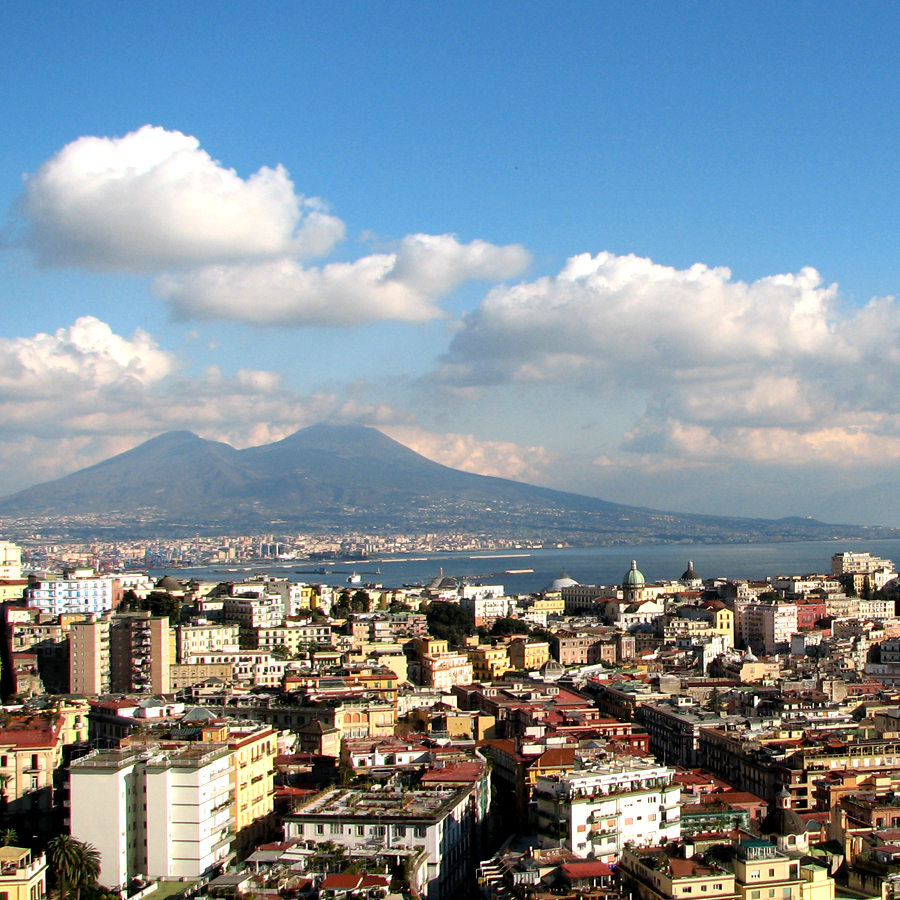
The apartment we stayed in while visiting Naples last week looks out not only on the sea, and on the island of Capri, but also on Vesuvius and most of downtown Naples. We had never shared space with a volcano before. Had never thought so much about the way a city, like Pompeii, could grow and thrive and then simply, one day, disappear under hot clouds of ash.

It's not hard to imagine why the south of Italy, and Naples in particular, seems to be so connected to the ebb and flow of life, the highs and lows. They sit between the sea and the storm, the cool waves and the lava.


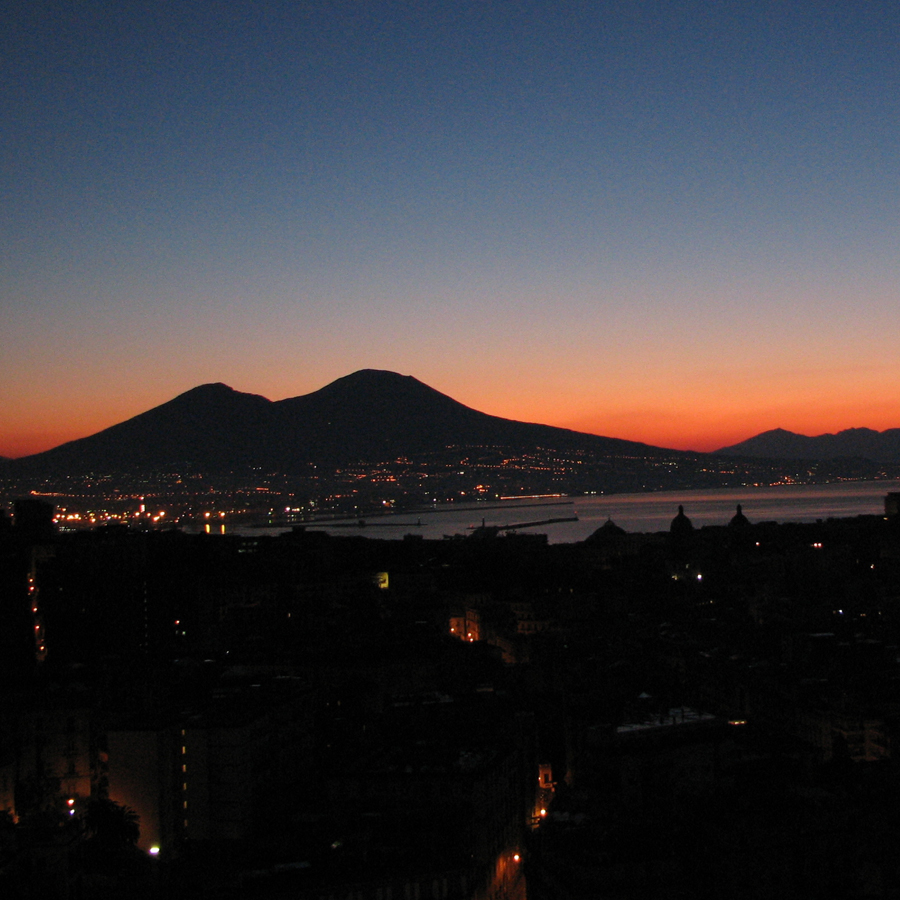
Each morning we awoke to the sun rising over Vesuvius, and birds starting to circle over the water. The shadows of palm trees with their jagged fronds slowly took on the light and became crowns of glorious green vegetation. At night the sun dropped behind the city, laying a blanket of pink and purple across the sky. It's a charmed place.


Fraught with problems, sure. Known for having issues, yes. But you cannot get me to say anything less than positive about this city. About Napoli.

It's a city with a heart. A vivid wild heart that thumps out of the enoteca and lines the streets with laughing, emotive Italians. A heart that lives in food so good and so real that you can't believe you could be so lucky. A beat that strums in espresso so strong that each tiny cup of coffee is served with a companion glass of water.

This is a place with a personality. It screams love me or leave me.

And we fell in love.

22 January 2007

valle dei templi


Just to review, Sicily (Sicilia) is the island about to get punted by Italy's boot. It sits in the Mediterranean, surrounded by blue ocean and blue sky, under a glowing blanket of sun. The soil is more orange than brown and spills out in craggy rocks and under large cactus groupings.

The benefit of taking a two-hour train ride across the island is the striking terrain streaming past the window. We were headed south from Palermo to Agrigento to visit the Valley of the Temples (Valle dei Templi) and although it was an early morning train - and it was a Sunday - we stayed up to watch the show. Our train started along the sea, paralleling stone beaches and deep blue waters. And then the train turned inward and crossed the island.


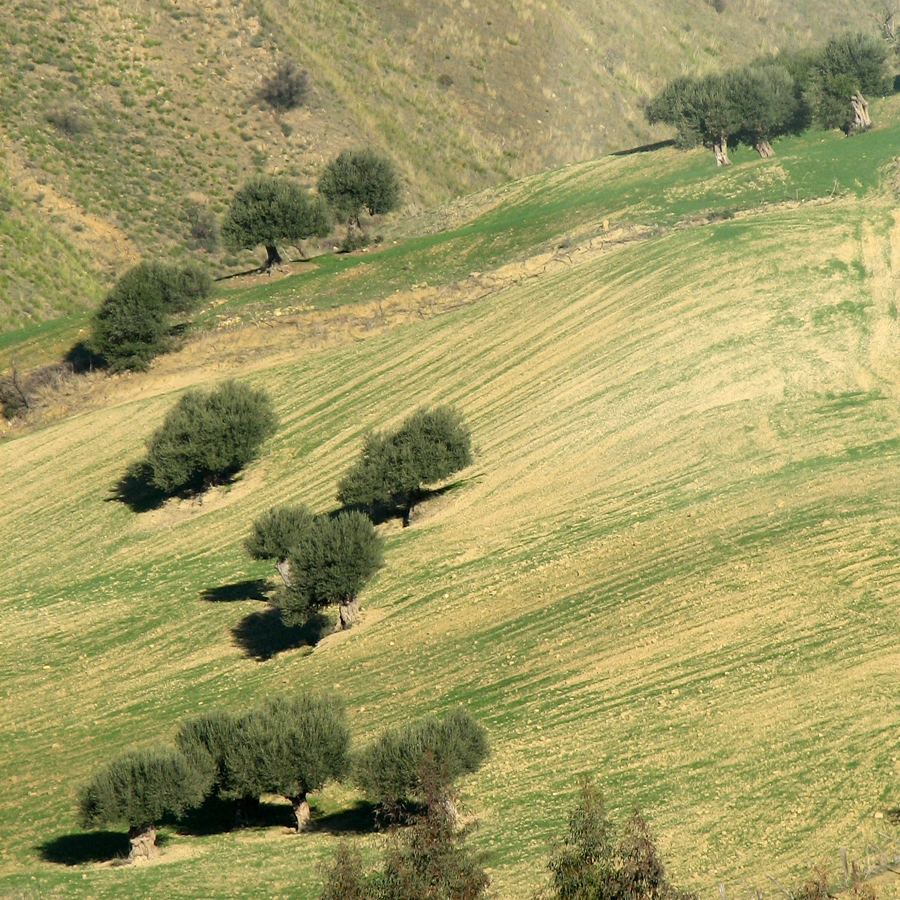
The land was gorgeous and raw, with the tough glow of something baking in the sun for ages. There are rough reaching hills and miles of flatlands pooling at their bases. Orange and lemon trees. Yellow grasses rolling down embankments. Patches of yellow soil tiger-striping the land where vegetation hasn't taken hold. Single trees, and their shadows, spotting isolated stretches. One ruined stone cottage in 5 miles of lonely land.

It was a very different view than we're used to seeing and we thoroughly enjoyed it. That's the wonder of Europe's trains - not only do you get where you're going, generally economically and on time - but you also get to see what passes along the way.


We landed at the Agrigento train station and began the always amusing process of figuring out how to reach our true destination. After a 7 euro map (unnecessary), several free maps (slightly more necessary), 2 coffees (not the way we like them), a run to catch the bus (successful), a bus ride (also successful), and a dusty walk along the side of the road we had reached the Temple Valley.

At this point I should add that the average Sicilian speaks Italian in a very different way than the average Milanese. Credit it to geographical differences but the Italian language down south is a lot less vocally precise than the Italian spoken up north. So while the people we ran into in the tourism industry spoke very annunciated Italian - presumably because they are used to dealing with Italians from all over the country - the average folks on the street were a challenge to understand. Neither of us understood an overheard conversation among locals in the same way.


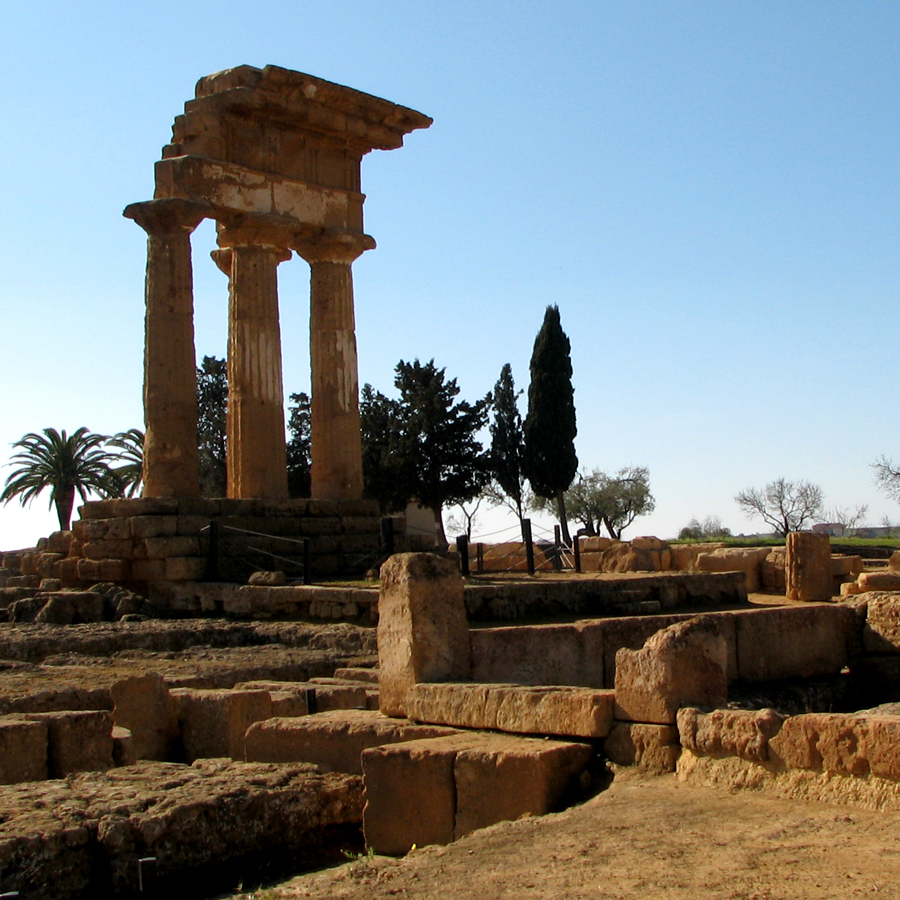
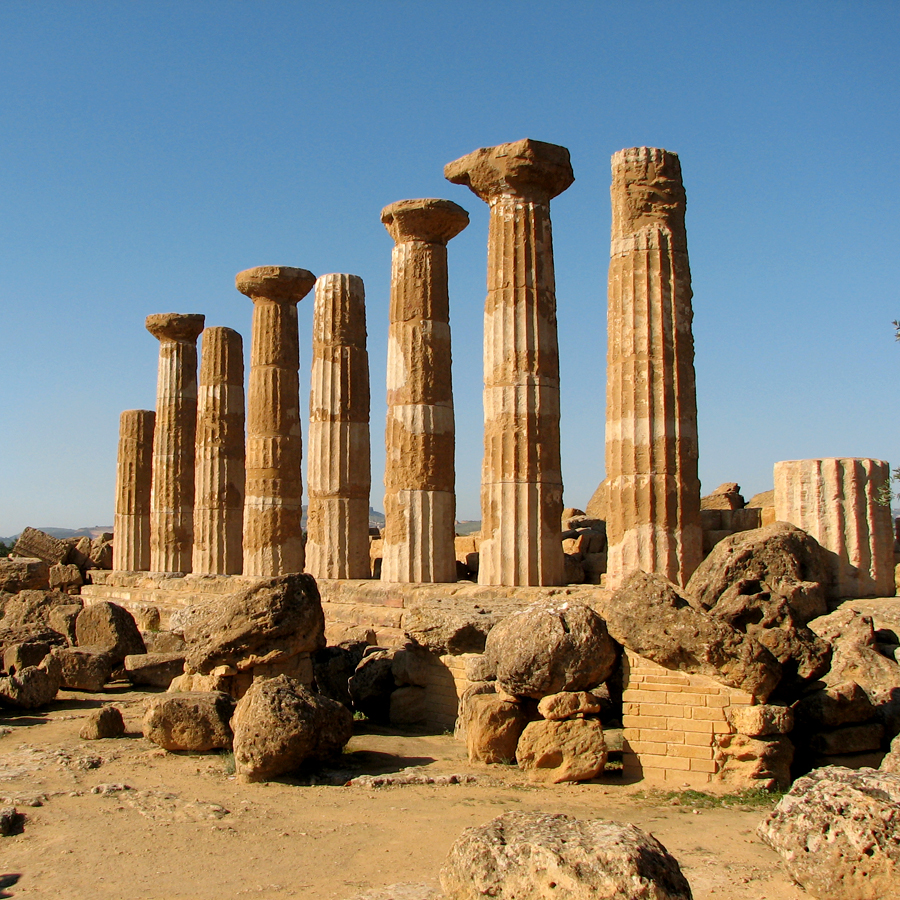
But we did find the Valley of the Temples and the ruins there are absolutely stunning. These are acknowledged to be some of the finest Greek ruins in the world and date from as early as 6th century BC. There are four specific areas with standing columns, two of them consisting of very complete temples. And the additional marvel is that you simply walk from one to the next. We took about 3+ hours to view the sites but that's because we like to linger (and take a few photos along the way). The woman who'd rented us our audio guide estimated it would take about an hour and a half -- I guess you can run through if you have somewhere else you'd rather be than wandering amongst ancient Greek temples under a cloudless sky.


You wander among the fallen stones and think of what these places looked like in their heyday, how they showcased the power of the region, and stood far taller than anything people of that time had ever seen. Standing in prominent view of the sea, these temples sent the message to all water-going arrivals that this place was a strong, vital area. Still standing today, glowing in the winter sun, the message was quite the same.

It was surreal to be in an Italy that felt so different. Not only was the weather slightly unnerving (70 degrees and sunny instead of 50 degrees and grey) but the setting... Grecian temples and palm trees... would be unfathomable up north. Sure, we've got some Roman ruins, and ok, the sun comes out occasionally, but a place like Agrigento - and Sicily in general - is a wonderful shock to the system. I doubt, though, that a Sicilian visiting Milan would find the shock they receive quite as invigorating.

19 January 2007

drinks for due


After a Saturday afternoon exploring Palermo we were walking along minding our own business. Enjoying the sidewalk (there actually was one), keeping an eye out for when the sidewalk might unexpectedly cease to exist, and doing our best to ignore Palermo's most heavily-used communication method: the car horn.

We were feeling a bit worn as we'd woken up in Milan at 3:30am that morning. That's early enough that you can call your family back in the States and they won't have gone to bed yet. I know this because I called my Mom. And she hadn't gone to bed.

At 4:30am the cab came and dropped us off at the train station. We had to catch a bus to the airport because the train wasn't running yet. Too early for the train is definitely too early for humans. So we waited for the 5:00am bus to Malpensa. Sure, we could pop for an 80 euro cab ride but that means we'd have to feel equally good about similarly wise uses of money such as dental floss made of gold and 6 inch crocodile stilettos.

When the bus finally decided to stop taunting us from a block away - where it had been parked for a good ten minutes - and drive on over, we boarded. I should point out that the ragazzo (young man) driving the bus was listening to dance music. Very rapid dance music. And it was still pitch black out. It really felt like we were going to a dance club along with a busload of our newest friends and all of our suitcases.


Once on the road we realized that the layer of fog we awaken to every morning in gray Milan ain't nothin'. It's but a sad little sheet of air that needs a diet so it hangs low. On the highway to the airport we saw real fog. Fog so thick you couldn't see anything more than a few feet in front of you. Nothing. And this is a few feet in front of a bus driving on the highway...

Luckily we got off the highway for a few miles and instead tried our luck with winding roads and fewer street lights. And as soon as we'd gotten back on the highway - dance music still thumping - we got caught in a traffic jam. Nothing like a 5am traffic jam in dense fog to drench you with positive feelings and excitement for the weekend. And the cherry on top? That was the 5 car pile-up we drove past along the side of the road.

But rest assured we made it to Malpensa on time. Only had two Italians cut in front of us in line and they made the rare gesture of asking if it was okay as they did so. Our plane had understandable problems taking-off on time but once in the air it was but a mere hour and a half to Palermo.

We landed on Sicilia (Sicily) under a golden sun, amidst palm trees and blue sky. What a gorgeous difference - it felt like summer with spring temperatures.

But after a day of exploring wild Palermo (more entries to follow) our early morning wake-up was dragging us down.

That's when we passed the pictured vendor across from the Duomo. We'd not have noticed it except for the sharp and enticing scent of lemons that wrapped around us both as we walked by. It was the scent of a field of lemons split open, lemony goodness absolutely everywhere.

But it was really just in this little stand. And more importantly, it was in what the two people standing in front of it were drinking.


We ordered two. Immediately. And watched the barman craft them. There were fresh lemons and fresh oranges. Seltzer and syrup. The whole thing was shaken and stirred until it developed a froth and all the bits of lemon pulp had floated to the top.

It was a wild ride, this drink. Tart beyond tart. Biting and fizzy. Great and unbearable all at once. Hallelujah for a challenge. And I feel no less a woman for asking for a bit of sugar. And then some more.

I can't tell you what the drink was called. But I can tell you where to go. Across the street from the Palermo Duomo. It's in an alley nook of sorts and it's manned by one guy. Unless he has to step away for a minute and then his friend covers for him. Don't ask his friend what the drink is called, he doesn't know.

And neither do we. We just know that it tastes like Palermo in the early evening after a long day of travel and sun. And car horns. In Palermo you just can't escape the car horns.

12 January 2007

molto chiaro


This sign in the window of a very modern Milano café reads: Looking for young ladies. Maximum age 25. Evening work. Waiting tables.

There's a tie for the aspect that I appreciate most about this sign. I can't decide whether it's the sheer brazenness of the qualifications they've listed as necessary for employment (being a female and being under 25) or if it's the absolute impossibility of this sign ever showing up in the United States.

The Milanese don't ask much of their city. Just the freedom to drive around on the sidewalks when street traffic is heavy and the social permission to smoke cigarettes with abandon despite international health warnings. As long as these basic rights are guaranteed, equal opportunity hiring doesn't seem to come up.

Besides, the work year is only 11 months long in Italy. What with everyone on vacation in August, there's not much time to focus on workplace improvements.

05 January 2007

la strada


I love the streets of Milan. Each its own short sweep of Italian life. Of Italian sun. Of Italian style.

No amount of slow-moving Italians keeping me from getting to work on time. No number of motor scooters nudging up behind me on a skinny sidewalk. No asphalt turned syrupy sticky in the August sun. Nothing can keep me from appreciating a walk down a Milan street.

Why bother chasing down the giants if you can't love the small wonders along the way?

03 January 2007

auguroni


It's only fitting that my 100th post be the first of a new year and so I say buone feste e buon anno to all! (Happy holidays and happy new year!)

We're settled back in Milan after a whirlwind December that saw far too many flights through Heathrow on the way to other destinations but happily also saw visits to and from many of those we love most. There were travels to Miami and Chicago - with a stop at Heathrow in both directions. And there was a visit to Newcastle (UK) with a stop at Heathrow again in both directions - with the added drama of diverting into Paris on the way home due to a medical emergency on the plane.

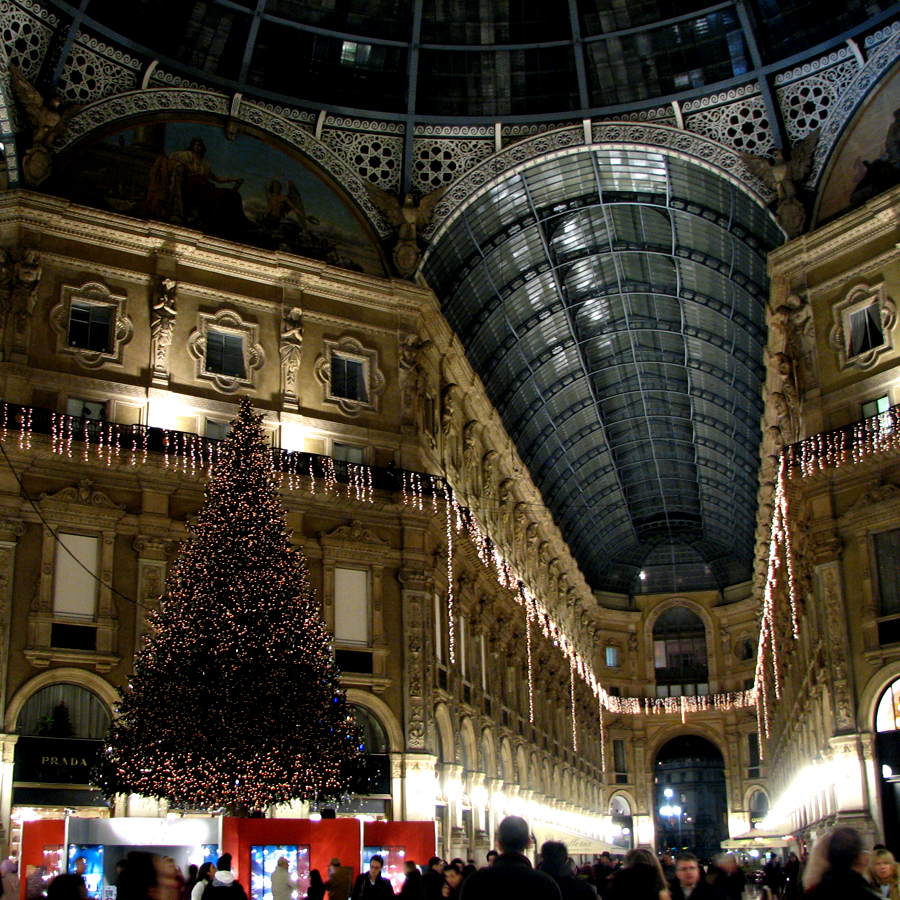
With all the talk of flying, and Heathrow, my belated gift to you this holiday season is our "December 2006: Travel Findings and Tips" highlighting just a few of the things we've concluded during this well-traveled month. The photos of Milano awash in holiday glow should get us back into the holiday spirit.


Number 1: Do not fly through Heathrow.

Really. We've come to the conclusion that the extra expense of avoiding Heathrow is well worth it. The place is a crazy mash of too many people, too many terminals, too many duty free shops, and too many perfumes for sale in the aforementioned duty free shops. Plus, for those of you who are geographically challenged let me remind you that Heathrow is located in ye olde England. And England uses the pound. And right now the pound is whomping on the dollar at an average rate of 2 to 1. The problem with this little equation is that it means you can't afford anything in the approximately 2 million duty free shops at Heathrow, and you certainly can't afford any of the food in the restaurants. So you will be tired, aggravated (because you've probably missed your connecting flight as we did on the way back from Thailand in October), and starving (the previously noted "can't afford the food" problem.) You will inevitably break down, use your credit card to buy a $7 sandwich in a little plastic container, fight the throngs for a place to sit, and then wonder why you didn't just pop for the direct flight. Hell, the difference in ticket price is probably pretty close to the meal you're buying at Heathrow anyway.


Number 2: Citrus Shred is a liquid.

Now, I'm all for security. 100% without a doubt a fan of rules and regulations. But I'm still irked that we couldn't bring in our carry-on bags the one English product my husband had been craving. Sure, I had guessed it would happen. And in my heart I think I knew that jams and jellies might not be what the Department of Homeland Security wants to see showing up in your carry-on, but I had held out hope that the citrus shred would make it through the x-ray. It didn't. It got chucked into the oversize plastic tub filled with orphaned full-size hair mousses, tubs of moisturizers, and half-finished bottles of water. So word to the wise - if you're not checking your bags, don't bring anything that's over 100mL unless it's solid as a rock. And even though the very same authorities insist you can only bring one butane lighter aboard the plane, if you'd like to bring a few more then simply point into the abstract distance beyond the metal detectors saying that the extra one is for your "brother" and you can bring as many lighters onboard as you'd like. So remember, no jelly... but lots and lots of lighter fluid.

Number 3: Do not eat BA food.

British Airways has a habit of serving terrible food. Maybe you can order a special meal -- vegetarian or kosher or something else someone has put a half a second of extra thought into -- but the regular stuff is just not going to work. At 7am there was an attempt to serve us a sausage and onion relish "sandwich," the use of the word "sandwich" being a little optimistic. It was a split bun that had a split grey sausage laying along the cut. Under the grayish tube was a speckling of brown which I assume to be the relish. This is what I gleamed from the people across the aisle who must have been starving because they actually ate it. There were so many sandwiches handed back to the flight attendant that I'm sure the plane did not need to restock for the next flight. It's a tough call to say whether the grey sausage was better than the cheese+cheese+butter sandwich that we had been served on an earlier flight. I haven't eaten either. I appreciate that BA is trying to be a cut above the rest by serving food and drinks during the flight without an extra charge. But I'll also point out that BA's fares are far more than a Southwest Airlines or an Easy Jet ticket. So there should be food. And right now, I'd assert that there isn't.


Number 4: The English are a fine people, uniquely suited to in-flight conversation.

Despite having an airport I wish to never see again and a currency I can't very well afford the English have provided the finest in-flight conversation we've found. There was the British oil worker returning home from an oil rig in the Caspian Sea who had a unique perspective on family and work. He has one month "on," working 16 hour days, and then one month "off," when he visits his family and catches up on lost time, taking the kids to school, tying their shoes, and trying to get away for visits to Italy with his wife. We also met a woman heading to New Zealand to visit her son who has started a new life in a new country. She was excited to see her grandchildren but had felt very guilty leaving her own ill father behind in England. She also insisted that Charles will never be King because he just isn't the right type, what with the Camilla Parker Bowles affair and all. These people really added a perspective to our visit to England that you can't get bopping about on the streets on your own. I may despise Heathrow, and feel abused by the pound, but I'll have a chat with a Brit on a plane any time.


Number 5: Bring your running shoes.

And get out there. Nothing beats having a run, or a walk, in a different place. You'll feel the pace of a city as you run your way through it; you'll feel the sun, the shade, the showers. You will run past houses and rivers and egrets and squirrels. You'll stumble through history and happenstance and see what kind of grass grows in which kinds of places. Miami will be warm and cold in the morning, and Chicago will be snowy and biting, and Newcastle will strike you with gale force winds along the Tyne. But you will know these places better for your efforts - you will have mental pictures that go beyond a tourists snaps. All for the space of a shoebox in your suitcase.

Bonus Tip Number 6: Go.

You must shake it up. You must leave the norms in the dust. If you don't get up and out, you will never know what it is you love most about where you are. And you will certainly never know what you're missing.

And on we go into 2007.

27 November 2006

built in mittens


Parma just may have something here.

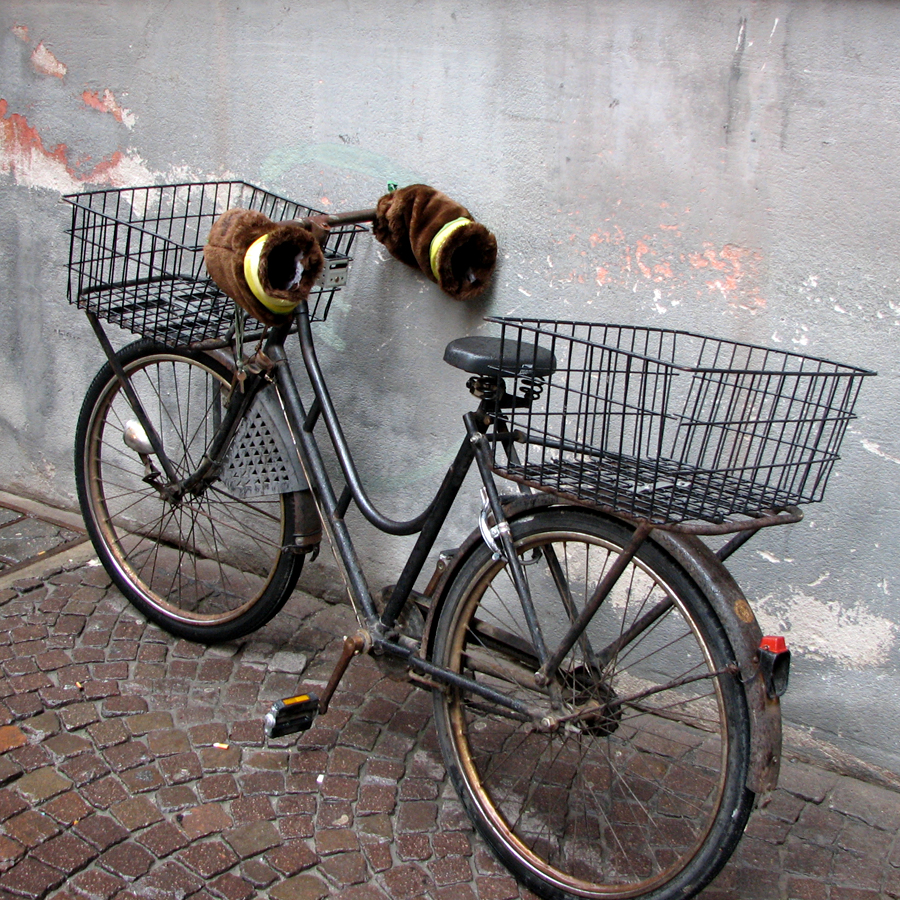
What keeps people from using their bikes in the winter? You might answer snow. Or sleet. Or ice on the roads. But what if you live in balmy Italy and just want to get on your charming vintage bicycle, in a skirt and six-inch stilettos, and pedal your way to a nice bottle of wine. What might keep you from using your bicycle?

Well, duh! It's obviously the age-old dilemma of cold hands. But now this enterprising cyclist will never again have to add "put on mittens" to their to-do list in the morning. They simply have to get on their bike and their mittens are put on for them.

Who says Italy never melds fashion and function?

parma is for eaters


Parma is an easy hour and ten minutes away from Milan. The train ride was picturesque, zipping past early-morning hunters combing through fields with their dogs at their sides, and the colors of fall blurring into a general warmth and glow that filled the windows. Parma is also a very familiar name. If you've heard of Parmesan cheese or Parma ham you've heard of Parma; both items were born here.


The city of Parma feels small but not too small. There's a river, appropriately named the Parma River, running through the western side of the city and a beautiful Duomo. There is also a magnificent octagonal Baptistry; four stories high and finished in the 13th century, it's pink marble and elaborate details give it more personality than most. In the Palazzo Pilota - which was built in the 1500's and restored after heavy damage during in World War II - there was an exhibit on medieval life in Parma, complete with digital imaginations of both church services and a Medieval market. Among many objects equally-aged and impressive there were books scribed in 1100 AD and priests' vestaments almost 800 years old.

There's a lot to see in Parma but we'd be lying if we didn't quickly admit to being there for the food. Most of our weekends are spent in search of new and wonderful Italian foods. It's a true wonder that both of us haven't been rolled away to the fat farm. And this weekend did nothing to weaken our candidacies.

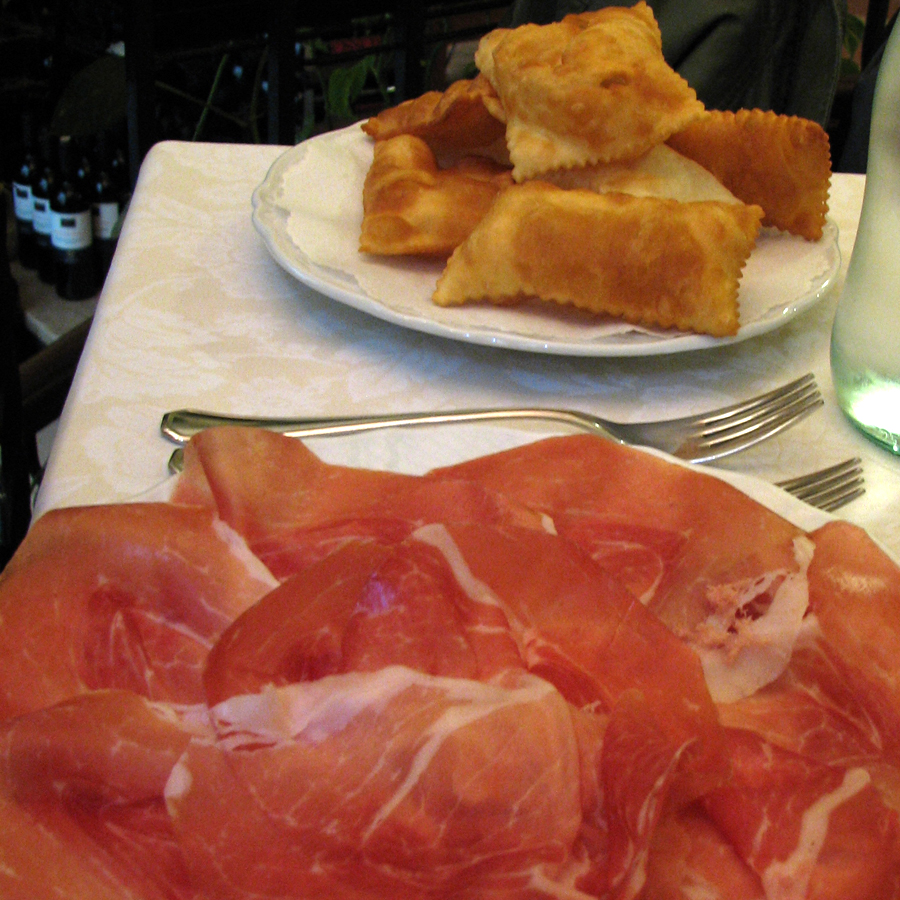
We had lunch at the Gallo d'Oro (Golden Rooster) and didn't pull any punches. There was the local wine - a fizzy red by the name of Lambrusco - that was perfect for a drizzly afternoon. Stefano took the opportunity to indulge in a local specialty that's not easily found: culatello. It's a type of ham that is so specifically made and in such an odd way that the authorities have made it difficult for it to come to market. This ham was accompanied by fried puffs of dough that were light, airy, and decadent. To start, I had the finest parmigiano risotto I've had to date. Go figure. It was creamy and savory, with traces of onion and a complex spectrum of flavors from the cheese.


Mixed homemade ravioli followed for Stefano - there were the squash variety, sweet but still savory, also those with a pesto filling with more of a punch, and then a spinach variety that let the others shine. Eggplant parmigiano followed for me - the oven's flames had rendered the cheese crusty and smokey, with the eggplant nearly melting in your mouth. For dessert, there was a cheese course highlighting a pecorino with a gentle bite that lingered on the tongue. Zero complaints here.

But I do have a comment. The lady sitting next to us, who had nodded a "buon giorno" our way as she sat down, was eating something that I can safely say I would never eat. Ever. It was horse carpaccio. Americans by and large are not conditioned to the idea that horse is for eating. For riding, for plowing... Yes. But not for chewing. This lady had a plate full of red, ground, raw horse meat. And she ate about 3/4 of it before stopping. We now know who shops at the horse butcher we'd passed earlier in the day.

But back to the flights of fancy that swirl through dreams and coffee breaks - handmade chocolates, artistic pastries, and miniature cakes.


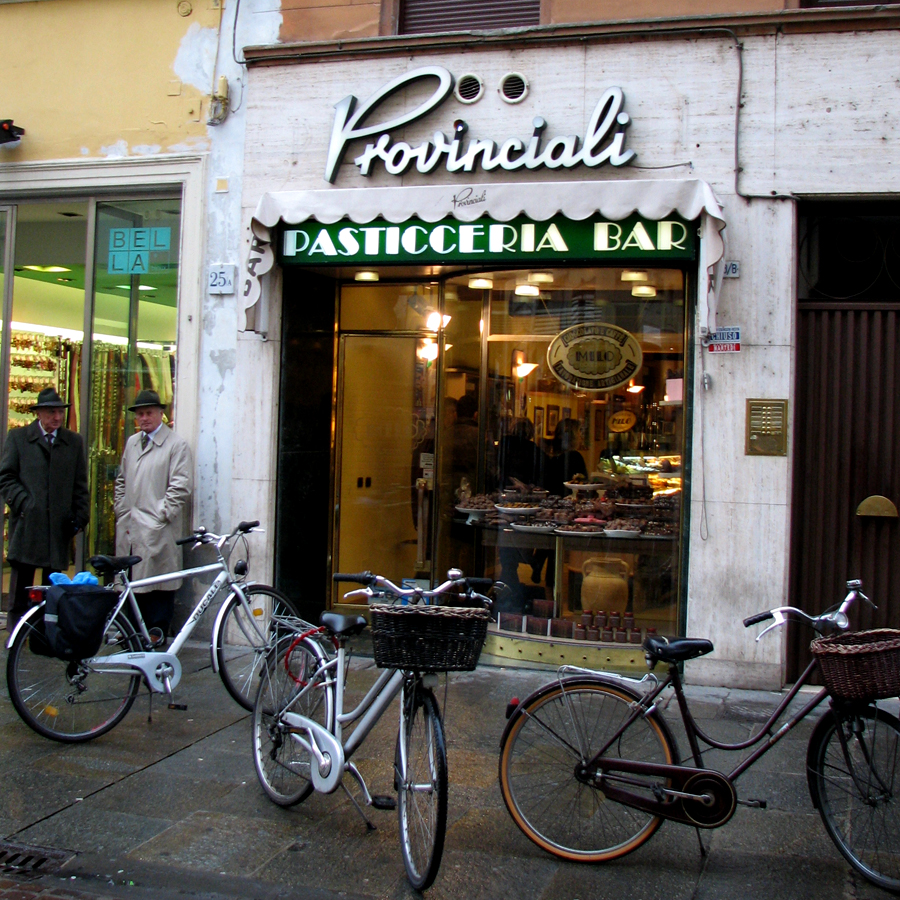
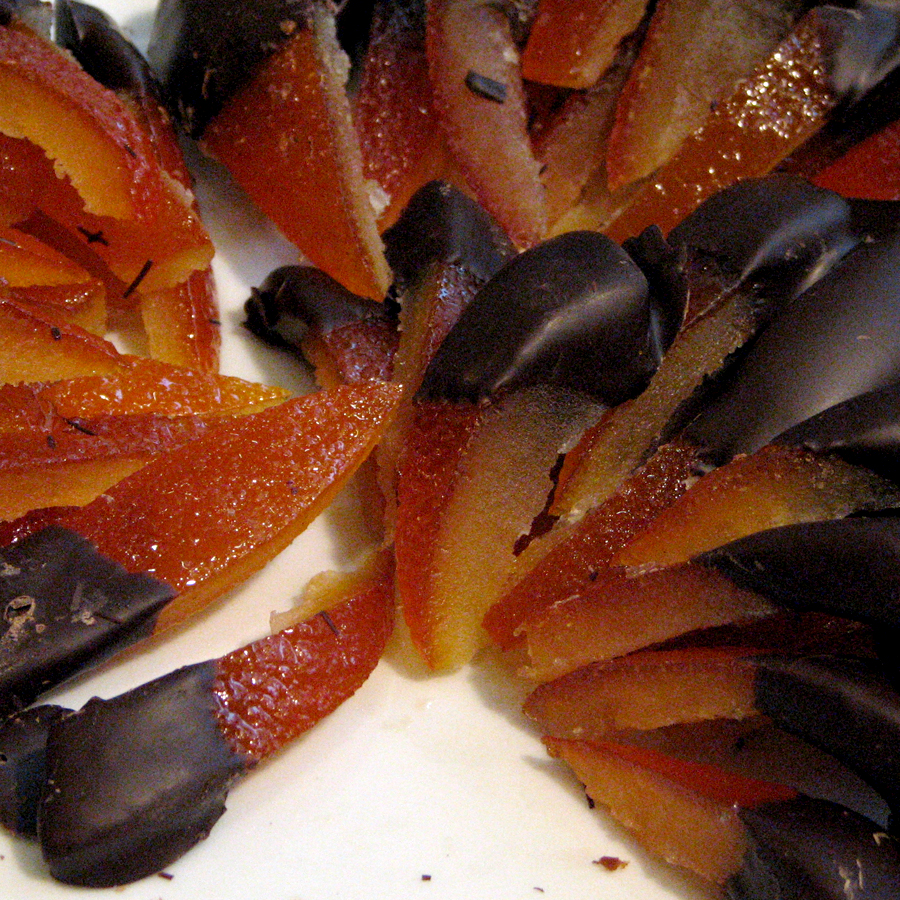
I am happy to report that despite an appalling lack of info in the guidebooks, Parma is full - and I mean 100% pieno - of pasticcerie and chocolate shops. It's hard to walk a block without tripping past at least one mouth-watering display window filled to the gills with terribly delicious sweets. And apparently these shops take their art seriously; Parma gets credit as the only city in Northern Italy that has thus far scolded me for immortalizing a window display with my trusty camera. Not easily dissuaded, Stefano proceeded to indulge in candied peel covered with dark chocolate.


There was even what we are now calling the greatest candy shop in the world. It was a small space - maybe the size of a teenager's bedroom - and it was crammed, floor to ceiling, with every kind of sweet imaginable. Was there an Italian candy or chocolate you'd wanted to try? Rest assured, it's here. Whether you can reach it is another story but there was a man there who between helping people reach the sweets, was helping us try the different candies.


The place was filled with customers and there was a pleasant commotion, kind of like Santa's workshop. What's not to like when you've got Italian chocolates in your mouth, a basket of Italian candy in hand, and a room of delights left to plunder? I'm not embarrassed to say that we spent enough in that small room to buy our round-trip train tickets and then some. Life's about the little things. Including lots of little candies.


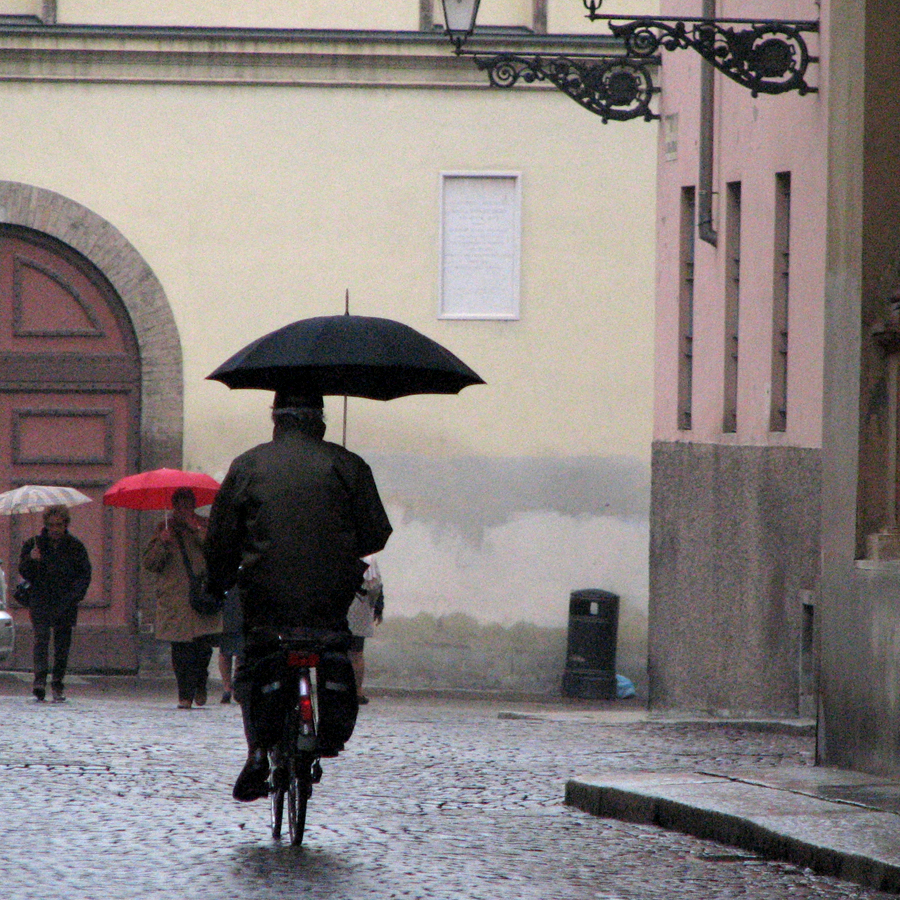
There was a gentle drizzle for part of our day in Parma. I like the way a little rain makes the streets shine, and the statues a little more mysterious. I also like the way Italians work to avoid contact with the weather. I can't remember ever seeing a person in the United States riding their bike while also holding up an umbrella. I always thought you had to choose one or the other. If you want to ride your bike in the rain, you get wet. If you want to use an umbrella, you don't get on your bike. But not in Italy. In Italy you get to do both.

Kind of like the way you get to eat more than one dessert. Italy's nice that way.

16 November 2006

seeing budapest


You can follow guidebooks and suggested walking tours, but you can also walk the way the wind blows. Taking a corner here. Ducking into a doorway there. This is the way to see a city. The way to notice it's details and flow.

My appreciation for Budapest lies in these details. The architectural touches that hover above the street. Stained glass that stretches across hidden galleries. Statues standing alone in the cold grey afternoon.


There is no way to fill the guidebooks with everything an eye can catch. It is my firm belief that a visitor is best served by taking coffee and then taking a walk. The caffeine propels you forward, while the views unroll for blocks.


I also believe that photos never really do moments their justice. It's fairly impossible to capture the way the light truly hits a ceiling of glass from behind. The way the wind cuts across your neck. And the honking car that caught your attention and made you turn in this direction. The photos never really explain it all.


But I can tell you that the coffee was strong and not nuanced the way our neighborhood bar makes it. The wind was crisp but not insistent. The light was dull... distant. The leaves were brown and yellow and crunched under the feet of Budapest. Our backs hurt from hours in the museum and our hands were in our pockets because we'd forgotten our gloves. It wasn't raining yet and there were long blankets of cloud stuffed into the sky. The cakes were too sweet and the people were smoking.

I can tell you that Budapest is grand and gorgeous. And there is so much more to see.

14 November 2006

budapest for the weekend


Budapest receives two thumbs way up for it's excellent role in our three-day weekend. The city is gorgeous and in November happens to be fairly devoid of tourists. The wind whipped a little and there were a few raindrops on the way home from our shockingly good Mexican dinner (more on that later) but there was no reason not to be enjoying this fine city along the Danube, in the midst of fall. With autumn colors in the trees and leaves blanketing the sidewalks, Budapest had the November personality that we really miss about Chicago.

The easiest way to describe Budapest is that it is at once cosmopolitan and charming. The Pest side of the river is replete with shopping and stature, Parliament and politicians whereas the Buda side has a castle and cobblestones, coves and corners. Both share the Danube, a gorgeous force of nature shooing boats through and catching light in its rivulets. Crossing the river on one of the many bridges gives not only picture-perfect views of the historic buildings clustered at its edges but also a sense of the current, the speed, and the energy this river possesses.


Little did I know that Budapest is also renowned for it's pastries. I dare say that had I been aware of this small piece of information earlier, things might have been different. But we made up for lost time and sampled a sweet array of delicious creations. The Hungarians don't seem super keen on moderation and their pastries bear the brunt of these leanings - chock full of creams and fillings and marzipan and more. And they are marvelous. Was my favorite the chocolate torte or the marzipan cake? But what of the cheese strudel that fell into the category of fine art? It's like trying to choose your favorite gelato flavor - impossible.


We spent our afternoons not only in bakeries and coffee shops but also in dramatic churches and eye-opening museums. While not nearly as dour as the Museum of the Occupation in Riga the Hungarian National Museum lets it be known that Hungary's history had its periods of great difficulty and terror - but is also filled with examples of the country's long history and culture. The Parliament was closed to the public for the month of November so we were only able to admire it from the outside. And there is much to admire - it sits on the shore of the Danube, stretching in epic proportions and spiking upwards with towers of artistic grace.


There was a large market full of overpriced paprika, stalls of fruits and vegetables, salami and cuts of meat, and upstairs there were stalls selling prepared dishes. We found excellent Hungarian food, doled out in plastic bowls and reheated in the microwave. Go ahead and laugh but it was fabulous ghoulash, and honey chicken with noodles -- all eaten in the midst of little old ladies and other tourists and working men who dined quickly alone. Sometimes food tastes better without the pretense of table clothes and comfortable chairs.

I should also give credit where credit is due and unequivocally state that between Milan and Budapest the award for best Mexican food goes to Budapest. We had an excellent meal at a restaurant called The Iguana, replete with chips and salsa, tacos and burritos. And while in my past life I would have been embarrassed to say that I went purposefully for Mexican food while visiting Hungary, in this life I consider it a victory. Oh, Italians - why don't you understand the dining joys of Mexico? But I digress.


The Hungarian National Gallery is gigantic and full of Hungary's greatest pieces. It sits high above the Danube, looking out on a wonderful view of the Pest side of the river. Up here is also where Matyas church can be found, with colored tiles peppering the roof. And the Fisherman's Bastion, a series of white towers overlooking the river. This is the area of the cobblestones and cozy cafes - and a giant eagle statue that is more than a bit daunting. You can also easily get up to this area on foot; the Funicular seems like the easy answer but at $5 a pop you might as well take the stairs and make up for the non-stop pastry fest that you've found yourself celebrating.

Other recommendations: if you're leaving town at the end of the day - say 8:00pm out of Bergamo - be sure you get on the shuttle to the airport early. We spent more time on the bus trying to get to the airport than we did on the actual plane. We were shocked that the busload of Italians stayed so calm. Turns out they knew something we didn't: all you have to do is get yourself checked-in and then the plane is basically going to have to wait for you to haul your butt up to the gate, no matter how much you dawdle. People who were on the same shuttle bus as we were, and arrived at the check-in at the same time we did, somehow got lost in a time warp and didn't make it to the plane until about 20 minutes late. But rest assured, the plane will wait for you. So please feel free to grab that extra piece of pizza you were eyeing on your way to the security screening line. We can wait.


But overall, it was gloriously easy to visit Budapest. Just a short plane ride away, it's a cultural jewel that we would have loved to have a few more days to explore. And next time we'll bring our bathing suits so that we can go to the famous thermal baths. And we'll bring our bushel baskets of cash so that we can stay in the Four Seasons which sits in arguably one of the most gorgeous buildings on the Danube. And we'll remember that smoking is still allowed in public places in Budapest so we'll be prepared to absorb a fair amount of secondhand smoke. And there's got to be another Mexican restaurant somewhere in Budapest, right? Maybe we can find that too.

07 November 2006

too good


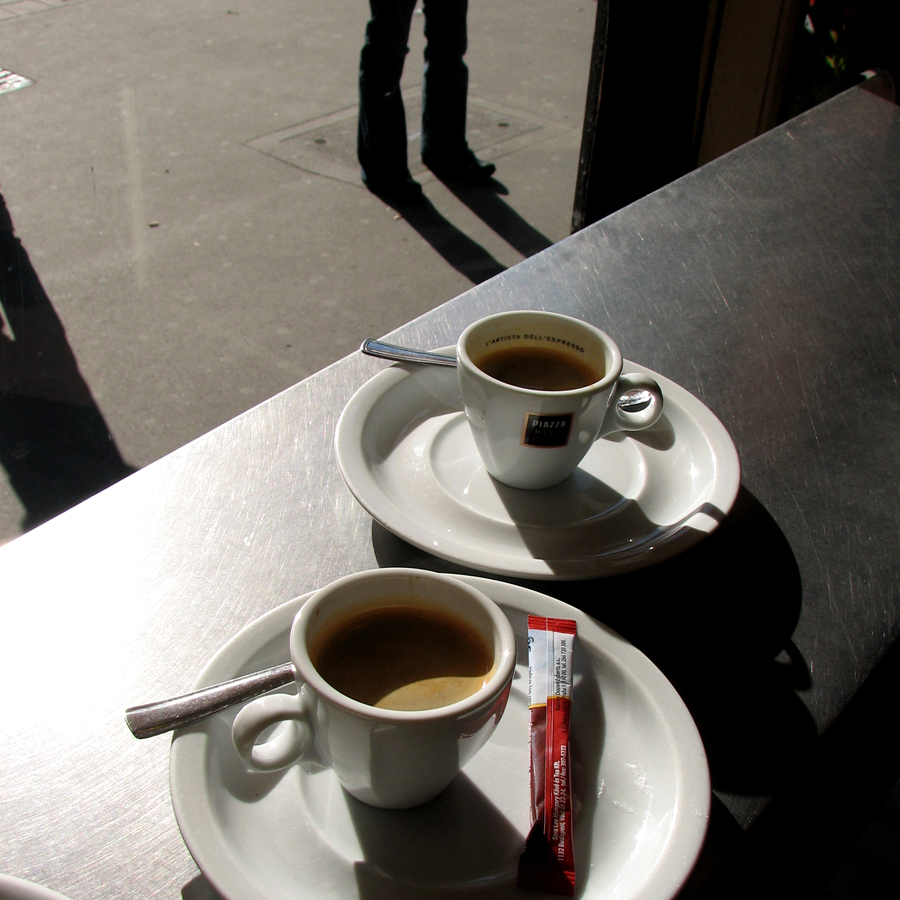
Hot chocolate in Italy is different. Very different. The Italians have taken the phrase very literally and instead of dissolving powder in a cup of water they've gone ahead and actually melted chocolate and put it in a cup.

Hot. Chocolate.

Sunday morning breakfast in Alba consisted of a pastry and a cup of hot chocolate. It was like drinking a chocolate cake. You know those molten tortes that are all the rage these days? Where one nudge with a fork causes the cake to ooze chocolate lava. Well, Sunday's hot chocolate was a lot like that. Except it was in a cup and you were supposed to drink it.

The feeling was sinful. And decadent. And very very right.

When you swirled your spoon in the cup, it was like steering through a silky pudding. It was your own personal cup of warm velvety cake batter - without the raw eggs your mother warned you about.


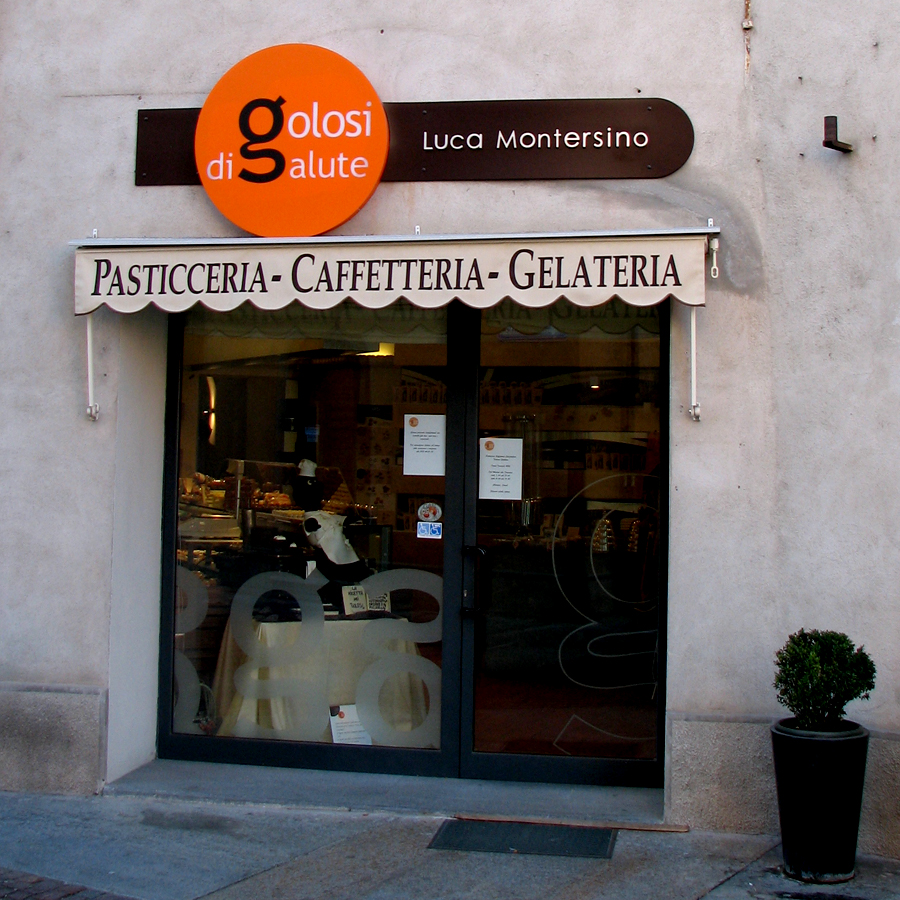
The shop itself is rather new - the owner's wife told us they'd been there for about a year - so you won't find it in the tourism guides. But it's still filling up with people which shouldn't surprise anyone. Saturday afternoon it had been so packed with adoring fans that we couldn't explore as much as we'd wanted. There's a full chocolate shop and bakery overflowing with all manner of sweet delights and a small café in the back. And it's in the perfect location right behind the Duomo.

But when we got there on Sunday morning there was just one other gentleman reading the paper over coffee. And eventually the owner's wife and daughter came in and we got to talking. Talking a little about her family in America. About our family from Italy. Chocolate. Her happy daughter. Life in Alba.

It was a nice conversation. And a nice pasticceria. And a cup of hot chocolate so nice that neither of us could get to the bottom.

Golosi di salute
Piazza Rossetti, 6
12051 Alba (CN)
www.golosidisalute.com

06 November 2006

alba is food love


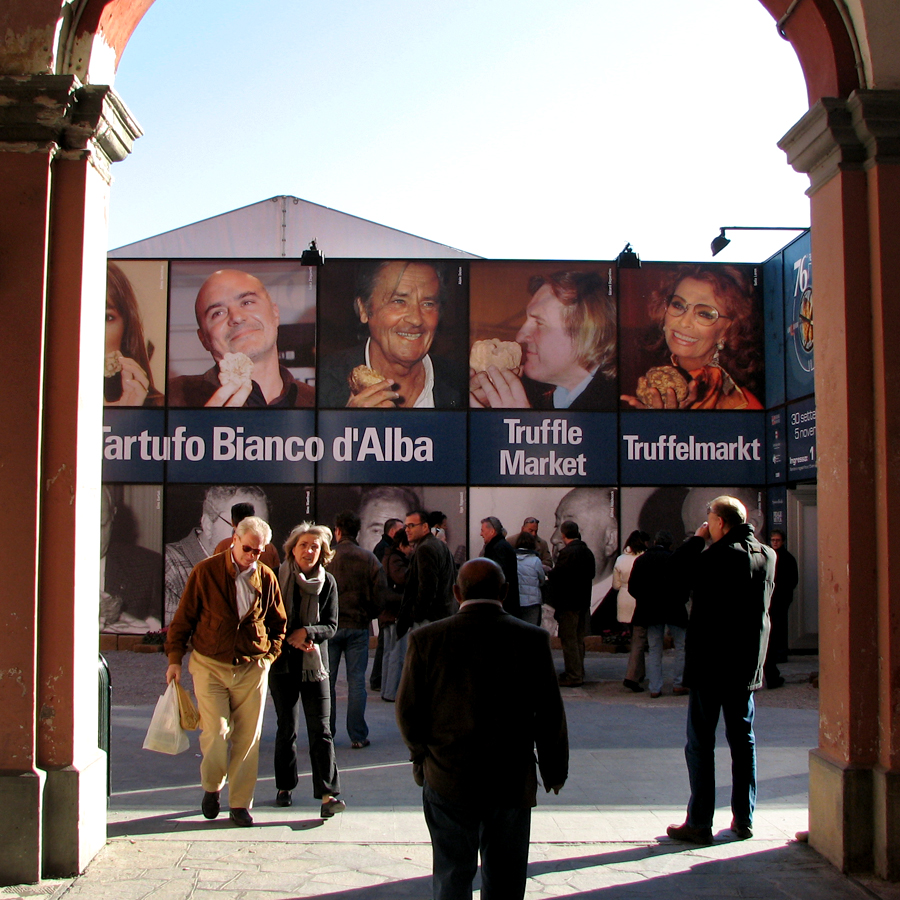
I can't blame the wine - even though we did start drinking shortly after ten in the morning. I can't blame the cheese - even though we sampled enough varieties to seriously harm those allergic to milk. And I can't blame the flourless hazelnut cakes - even though we must have had about five different versions. Our new love for Alba cannot be blamed on one single aspect of the city - no - it must be blamed on all aspects, every single one. Not the least of which was the White Truffle Festival, which from September 30 until today combined all that is glorious about Piemonte's Langhe region into a series of festival halls.

How to begin? Well, first you pay one euro. Just one euro to enter a place that smells more than a little like bad breath. Bad breath, you say? Why would I pay to go in there? Oh, my friend, you will go in there and you will love it. You will marvel over the fact that it was just 1 euro to enter. You will stay there for several hours, wandering the halls, eating and drinking. And when you can finally bring yourself to leave you will roll yourself out with multiple shopping bags in hand, filled with food and wine. It's dangerous... this truffle festival. But it's also divine.


On the map the city of Alba looks fairly close to Milan. And I suppose it is; if you have a car. We took the train and arrived in about three hours, after taking three trains and following what might be kindly-termed a circuitous route. It was more than worth it, though, and as dawn broke we watched wine fields climb the sides of rolling hills, and fall colors sweep across our path. It was gorgeous. And gave us plenty of time to ponder the question of why there's not a more direct route. But I digress.

I'm convinced that I had never been in the presence of a truffle before. Chocolate truffles, yes, I've eaten my share. But truffles that a dog found in the ground? Nope, never. So I didn't know that the smell we came across when we entered the festival was the smell of hundreds of fresh truffles, all of which had been extricated from the ground by skilled truffle-hunters and brought to this market to display and to sell. And I'm sorry, but it's true. The magical fungus that costs obscene amounts of money smells a bit like muted garlic breath.


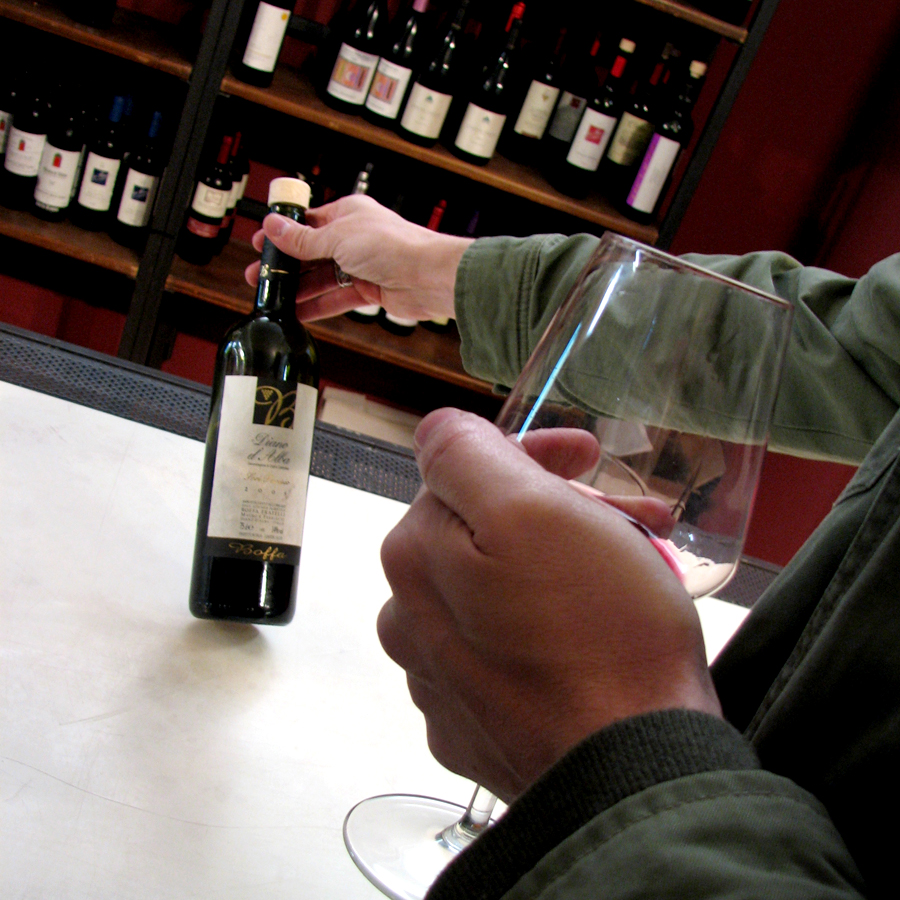
But the wine? First, you're advised to cup the wineglass in your hands in order to warm up the rich red liquid because it's so cold in the festival hall. Then you take a deep sniff to capture the aroma. The Dolcetto smells fruity and earthy and barky and warm. And Asti smells like flowers in the sun, and peaches and apricots and rainbows. And Barolo to me smells meaty and rich.

And the people who run the wineries and who line the festival hall want you to taste these wines. They want you to taste all of the wines. They'll fill your glass and tell you about their grapes, their techniques, and the personality of their soil. And then you'll say thank you and visit someone else who will do the same. It's like pub crawl only the point is not to get drunk and head-butt people in the streets, but rather to taste the magical wines of this silty region and try to grasp what it is that makes them so special. And along the way you're bound to realize there are a hundred reasons why...


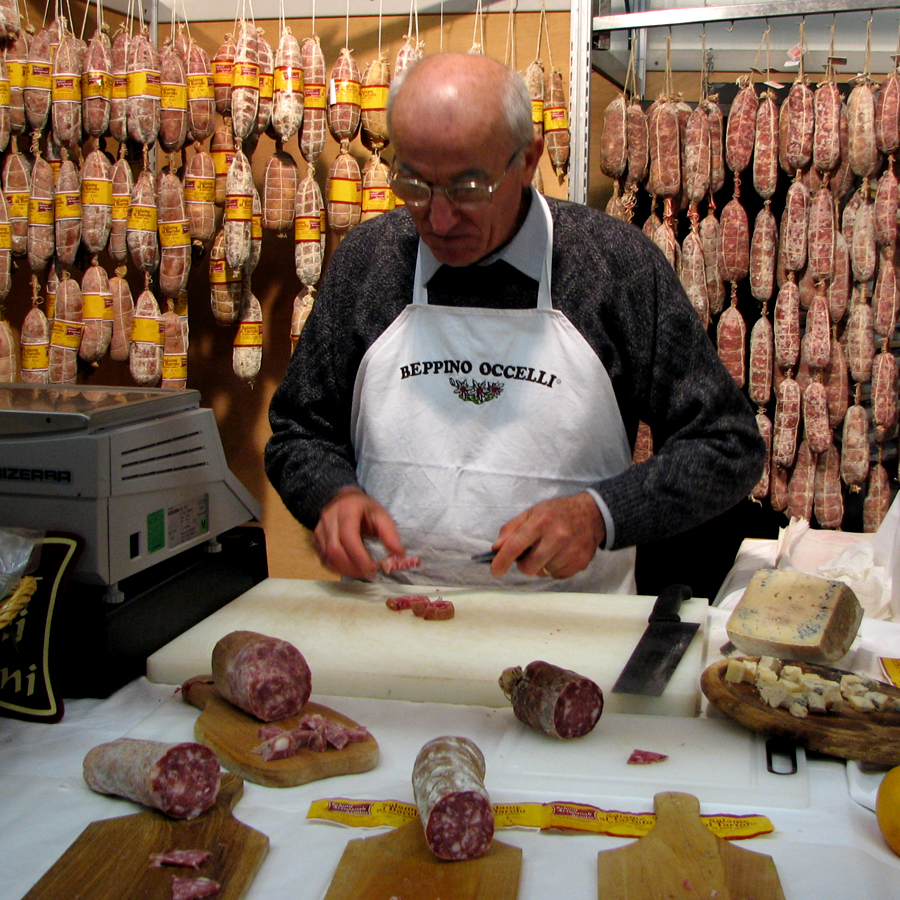
But wait! The cheese people are holding out knives with shavings of cheese on them! And you can't say no because it's cheese. Wonderful cheese! And with so many different kinds - so many textures and flavors, it's almost too good to be true. There is sausage and salami too; hanging along the wall and laid across the table and being cut into bite-sized samples. Not just a paradise for cheese-lovers, but for their meat-loving counterparts as well.


There's also an ungodly amount of cakes, cookies, candies and general sweet ephemera lining the festival. There's the earlier-mentioned flourless hazelnut cake which is moist and not too sweet. And chocolate everywhere; in chunks and bars and elaborate art. There's torrone in bricks large enough to knock out a grown man. And you, as a truffle fest attendee, are obligated to taste everything put before you. Truly. And p.s. there's no shame in going for seconds. I tried.

I will tell you that the one difficulty of the festival is the other festival goers. While we saw very few Americans, there were sackloads of Germans and other Nordic folk. These are not small people - in fact, I'd go so far as to call them quite sturdy. Stefano, who while not being a very heavy fellow is quite tall -- I can usually see him easily across a crowded room -- was absolutely dwarfed by a crowd of men and women who made him look like a toddler. He tried but there was no penetrating the wall of heartiness, and no way for him to reach the salami sample he so badly desired. And while we went back later and Stefano tasted what he claimed was absolutely excellent salami, he still couldn't escape the idea that there are people that large in the world, and that they wouldn't let him near the smoked meats.


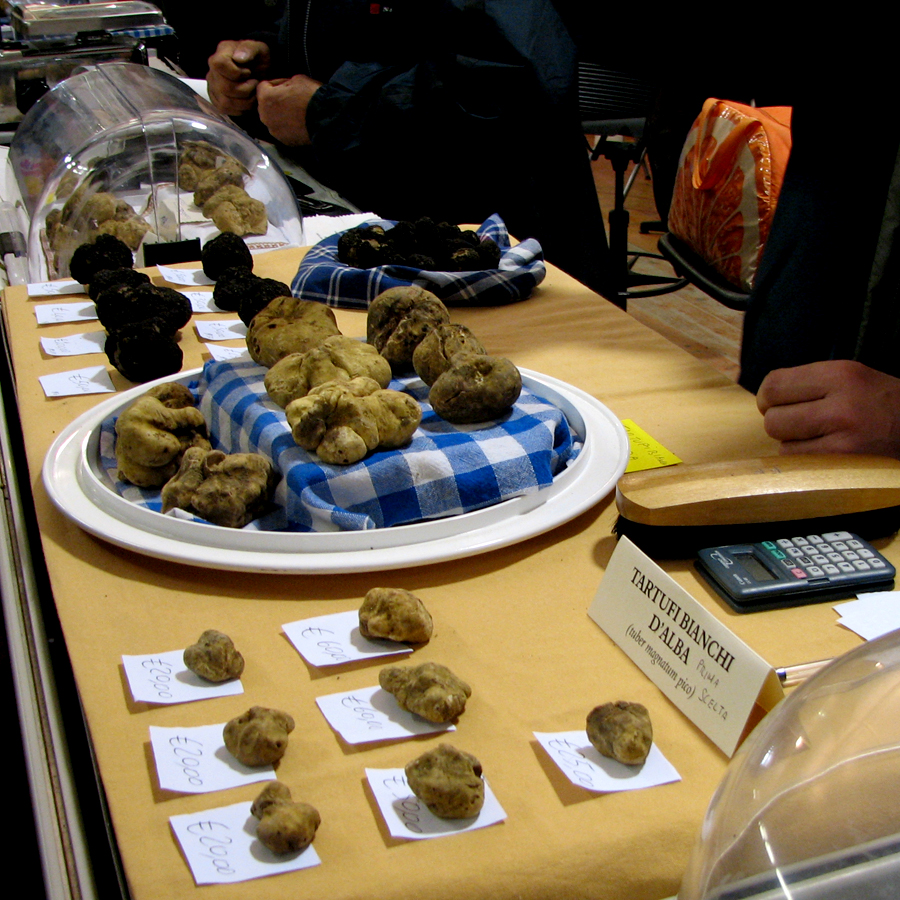
And now we come to the truffles. Oh delicious aromatic fungus. Why haven't we met you before? (Aside from the fact that you're too expensive and kind of rare and all...) The interior of the festival was an area where the truffle hunters lined up at tables, along with their scales and calculators, and displayed their goods. Some simply piled the truffles into little mounds while others preciously laid them out one-by-one. There were white truffles and black truffles and they ranged in size from pretty small to several golf balls large. Very small is almost in our price range, while any larger is definitely not. There was a generously-sized white truffle for 1300 euro which we found almost comical, except for the fact that not everyone in the crowd was pointing and laughing.


As you might imagine, there are very few rag-taggers trotting through the truffle festival. And those who are there as serious buyers are wearing the outfits of the filthy rich. But to be there as a spectator is just as fun. You get to smell the truffles all the same. And you can talk to the truffle-folk about how this line of work found them and their families. We talked to a girl who was there representing the finds of her father -- who truffles at night with his specially-trained dog. He was taught by his father who was taught by his father and so on. We asked her why she didn't hunt for the truffles - and her answer was that she felt it was too dangerous to be wandering around in the middle of the night. A practical girl who then went on to sell several truffles for about 100 euro.

There's definitely an art to knowing a good truffle and we received a brochure that tried to explain it. There's something about the strong garlicky smell of a white truffle originating from all sides of the truffle, and one must also keep an eye out for claw marks from the dog who dug it up. Also, don't buy one that's chock full of parasites or has been reconstituted from multiple small parts by an unscrupulous dealer. Rest assured, though, there's a truffle judging booth at the festival where you can take your prized-purchase to be sure you got your euro's worth.


I have to admit to purchasing our own little truffle. And believe me when I say it's little. But it smells strong and it looks the part. And we're going to shave it thinly and eat it over eggs. That's what everyone else was doing.

If the Alba truffle festival hadn't ended I would encourage everyone to hop onto whatever form of transport was available and get to the festival now. But as today was the final day I can only implore you to plan ahead for next year. This festival was one of the greatest food joys that we've had here in Italy and we're still groaning over its delights. The wine, the cheese, the truffles... The three hour train ride going in circles.

It's all about the goodness of Italy and the lengths people take to enjoy it. Some of us hop on trains and tool around the countryside. Others take their dogs out in the dark of night and hunt for a very special fungus. Still others cultivate grapes with a love that few of us understand. But we all come together every so often and share our energies in a single place. Some of us as wide-eyed visitors, others as wisened producers... at a crisp fall picnic that takes place in Alba.

See you there next year.